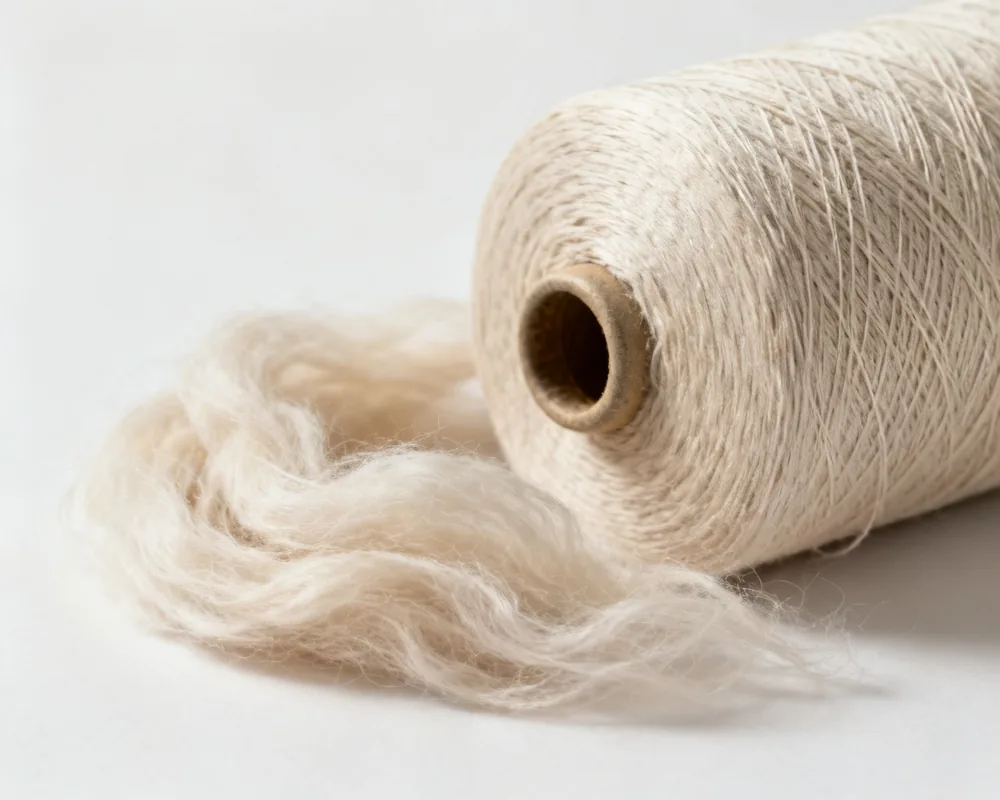
Yarns, fibers, and threads
Use this family when the brief is still at staple, tow, or yarn. Linear density should keep its own unit, such as dtex or denier, and should not be rewritten as a cotton count.
View the fiber and yarn scopeLyocell and modal are the two cellulosic routes this catalogue is built to compare. A jersey or a shirting cloth comes after the fiber, the blend ratio, and the supply format are named.
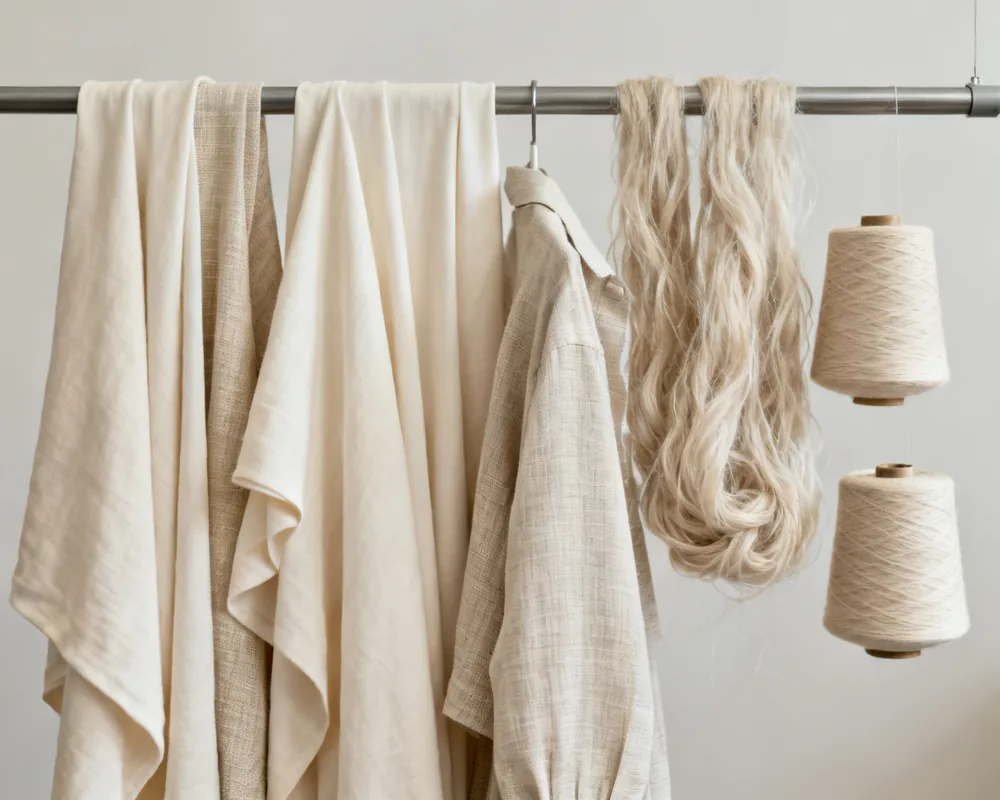
For cellulosic apparel, the useful cut is not a membrane stack. Ask which regenerated cellulose route is in play, which linear density the yarn uses, and which face the designer will actually handle. Lyocell and modal can share a cellulose origin and still differ in wet touch, drape, and how a knit or weave takes color. When a file already contains figures, keep warp, weft, and yarn count apart from GSM and usable width. A tensile line can name ISO 13934-1, a tear line ISO 13937-2, and a wash-colorfastness line ISO 105-C06. Those codes name procedures to attach. They are not measurements issued by this website.
Open the development path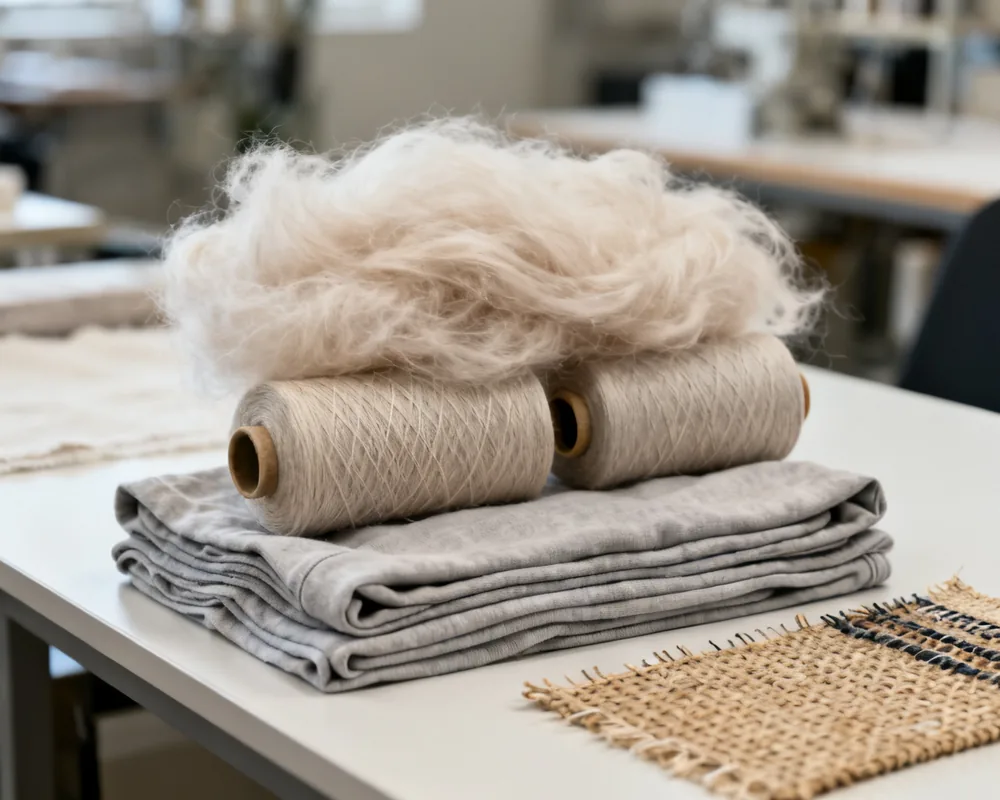
| Use context | Question | Evidence to discuss |
|---|---|---|
| Next-to-skin knit | Which fiber and stitch should carry the hand? | Composition, yarn linear density, and a physical swatch |
| Woven shirting or dress cloth | What drape and opacity are being compared? | Weave, GSM target, and usable width |
| Blend development | What stays cellulosic, and what is added? | Declared percentages and the sample they belong to |
Use this family when the brief is still at staple, tow, or yarn. Linear density should keep its own unit, such as dtex or denier, and should not be rewritten as a cotton count.
View the fiber and yarn scope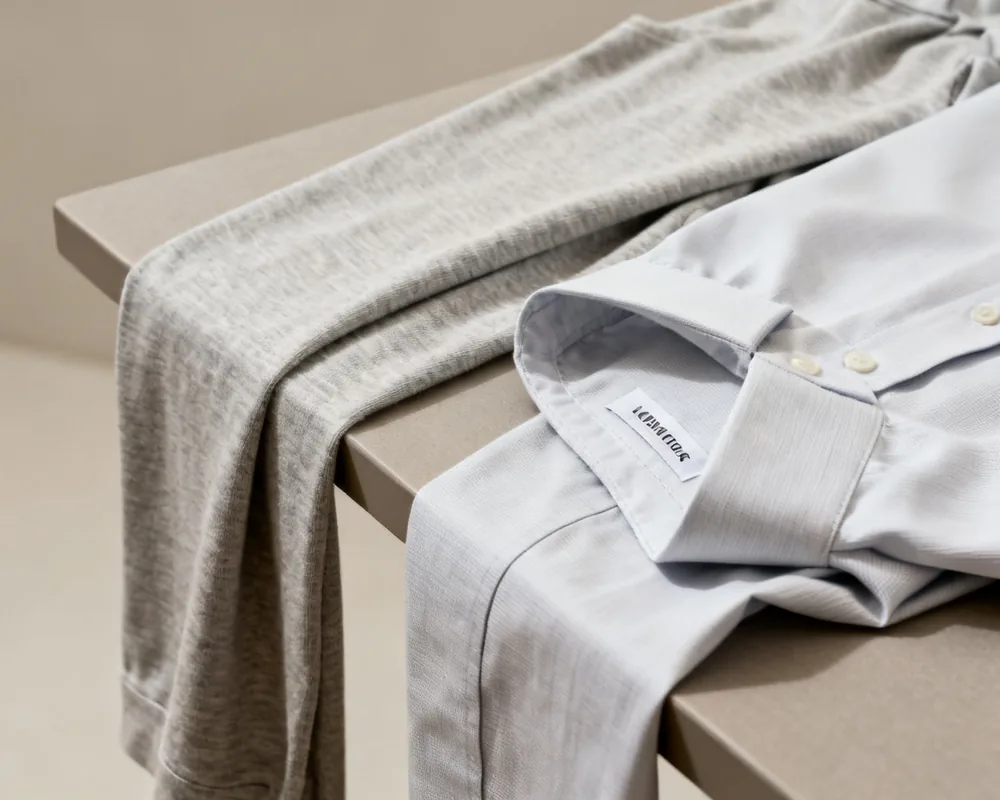
Use this family when the reference is already cloth. GSM, usable width, and finish sit beside the fiber name. A screen photo does not replace the hand of the cutting.
View the apparel fabric scopeIf a number is quoted for strength, shrinkage, pilling, or colorfastness, name the method and the version. A fiber trademark is not that record.